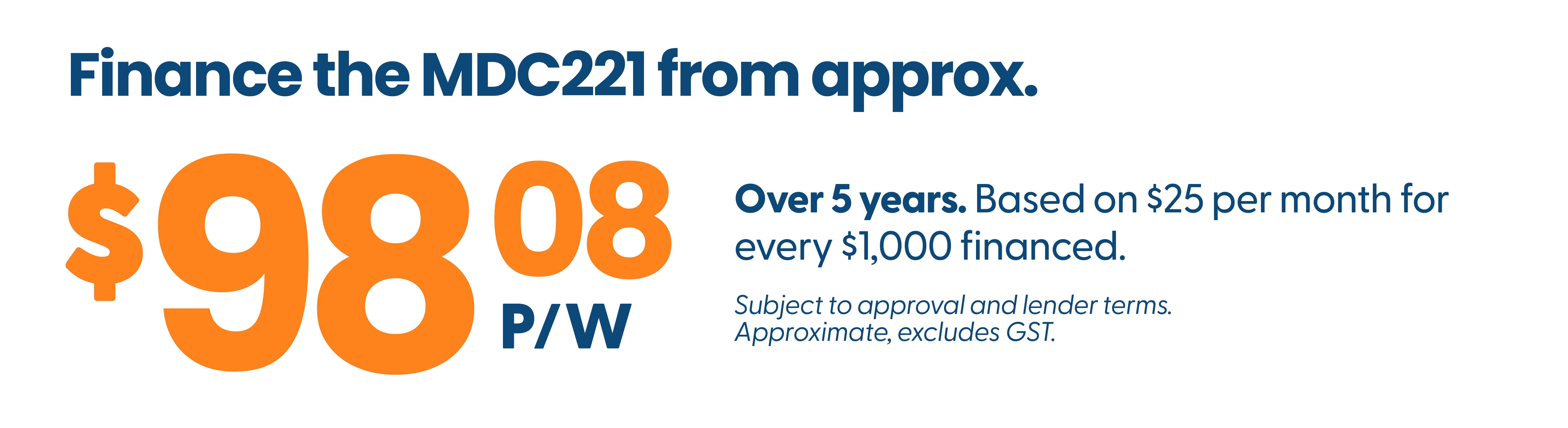
MDC211 Finance
Know Your Caravan's Real Weight Before You Tow
Overview
Most caravanners can tell you the length of their van, how many it sleeps and which park they're heading to next. Far fewer can tell you what it actually weighs once it's packed. This guide explains the numbers that matter in plain English, and how to find yours.
What Queensland Police found at the roadside
Queensland Police have been weighing caravans and trailers at roadside sessions, and the results are an eye-opener. When the Bundaberg Highway Patrol ran a weighing session at Gin Gin, they found that 90% of the caravanners they spoke to had no idea how much weight they should be towing. Out west, Longreach Police weighed 12 rigs, and 9 of them were overweight.
90% of caravanners checked at Gin Gin, QLD, had no idea how much weight they should be towing
9 of 12 rigs weighed by Longreach Police in Queensland were overweight
Sources: QPS Bundaberg Highway Patrol, Gin Gin, reported Feb 2025 (The Grey Nomads); Longreach Police, July 2022 (carsales).
None of this means those owners were careless. The extras add up quickly: a full water tank, a second gas bottle, a fridge full of food, the bikes, the generator, the awning mat, the camp chairs. Each one seems small, but together they can add hundreds of kilos. The only way to know where you really stand is to weigh it.
The terms you'll see, in plain English
When you weigh a caravan, you'll come across a handful of terms and abbreviations. These are the ones that matter most.
GTW (Gross Trailer Weight): the actual weight of your caravan or trailer as it's loaded for travel, including water, gas, food, luggage, batteries and accessories. It's what your van really weighs on the day you tow it.
ATM (Aggregate Trailer Mass, sometimes called ATW): the maximum legal weight of the fully loaded caravan when it's standing on its own wheels and jockey wheel, unhitched from the tow vehicle. You'll find it on the van's compliance plate, and your loaded weight should always sit at or below it.
GVW (Gross Vehicle Weight): the total weight of a vehicle, including its own weight, passengers, fuel, accessories and cargo. For your tow vehicle, the maximum allowed figure is usually listed as GVM (Gross Vehicle Mass).
Tow ball weight (TBM, or tow ball download): the weight the caravan's coupling presses down on your tow vehicle's tow ball. It's often around 10% of the loaded caravan's weight, but the right figure depends on your setup. It counts toward what your tow vehicle is carrying, and it must stay within the limits for your vehicle and tow bar.
Caravan plus vehicle weight (GCM, Gross Combination Mass): the combined weight of your loaded tow vehicle and loaded caravan, hitched up and travelling together. The tow vehicle's manufacturer sets the maximum GCM, so check it in the owner's manual.
Good to know: on Australian compliance plates you may also see GTM (Gross Trailer Mass). That's the maximum weight the caravan's axles can carry while it's hitched up, so it doesn't include the weight on the tow ball.
How to weigh your caravan
Weighing doesn't need to be complicated. The key is to weigh the rig the way you actually travel, not the way it left the factory.
Load the caravan exactly as you would for a trip. Fill the water tanks you normally travel with, fit the gas bottles, and pack the food, clothes, tools and toys. If it goes on the trip, it goes on the scale.
Take it to a public weighbridge, or a business that offers caravan weighing. A public weighbridge gives you total weights. For the full picture, look for a caravan park, dealer, workshop or mobile weigher using NWS Nuweigh MDC221 weigh pads. Its 4 wireless pads and tow ball scale give individual wheel, axle and tow ball weights, accurate to 1 kg, in a single weigh, and you leave with a printed ticket.
Weigh it in stages:
the entire rig (tow vehicle plus caravan), which gives your combined weight
the tow vehicle on its own
the caravan on its own, if possible
Comparing those numbers tells you how much the caravan weighs, your tow ball weight (how much of the van is sitting on the tow vehicle), your combined weight, and whether any of them is over its limit. Keep the printed ticket, as it's a handy record to compare against next time you load up differently.
A worked example: the caravan
Caravan tare weight (empty, as built): 2,200 kg
Water, food and gear added: + 400 kg
Actual caravan weight (GTW): 2,600 kg
ATM on the compliance plate: 2,800 kg
Result: the caravan is 200 kg under its ATM limit.
That 200 kg of headroom is worth knowing about. Fill a second water tank or add a generator and a couple of bikes, and it can disappear quickly. That's why it's a good idea to weigh again whenever your setup changes.
Checking tow ball and combined weight
The caravan is only half the picture. Here's the same van hitched to its tow vehicle:
Tow ball weight (measured): 260 kg
Maximum tow ball weight for the vehicle and tow bar: 350 kg
Tow ball result: 90 kg under
Tow vehicle weight, loaded and hitched (GVW): 2,950 kg
Tow vehicle GVM: 3,100 kg
Tow vehicle result: 150 kg under
Caravan plus vehicle weight (whole rig on the weighbridge): 5,290 kg
GCM for the tow vehicle: 5,900 kg
Combined result: 610 kg under
Result: this rig is within all three limits.
Example figures only. Your vehicle's and caravan's limits will be different.
Notice that adding the hitched tow vehicle (2,950 kg) to the caravan's own weight (2,600 kg) doesn't give the combined figure. That's because the 260 kg on the tow ball is already counted in the tow vehicle's weight once you hitch up.
Before you head off
Find the ATM (and GTM) on your caravan's compliance plate.
Check your tow vehicle's GVM, GCM, towing capacity and maximum tow ball weight in the owner's manual or on its plate.
Check your tow ball weight, and the combined weight of the caravan plus vehicle.
Weigh the van fully loaded, the way you'll actually travel.
Compare your real weights with the limits and adjust your load if you're close.
Re-weigh after adding accessories, upgrades or a bigger load.
Please note: weighing alone doesn't determine legal compliance. Always check your vehicle and caravan manufacturer's ratings and your state's towing rules.
To view this product in action, check out our latest video.
Do you weigh, sell, build, service
or host caravans?
Your customers need to know their weights, and your business can be the one that gives them. The NWS Nuweigh MDC221 is a business-grade, fully wireless caravan, trailer and car weighing system:
- 4 weigh pads plus a tow ball scale: wheel, axle and ball weights in one weigh
- Wireless display and thermal ticket printer with your company header
- Accurate to 1 kg, 40-hour battery, built-in ramps and carry cases
Parks can run weigh days for guests, manufacturers can weigh at end of line, dealers at handover, and workshops can add weighing to every service.
Find out more information or speak to one of our weighing experts at NWS NUWEIGH call today.